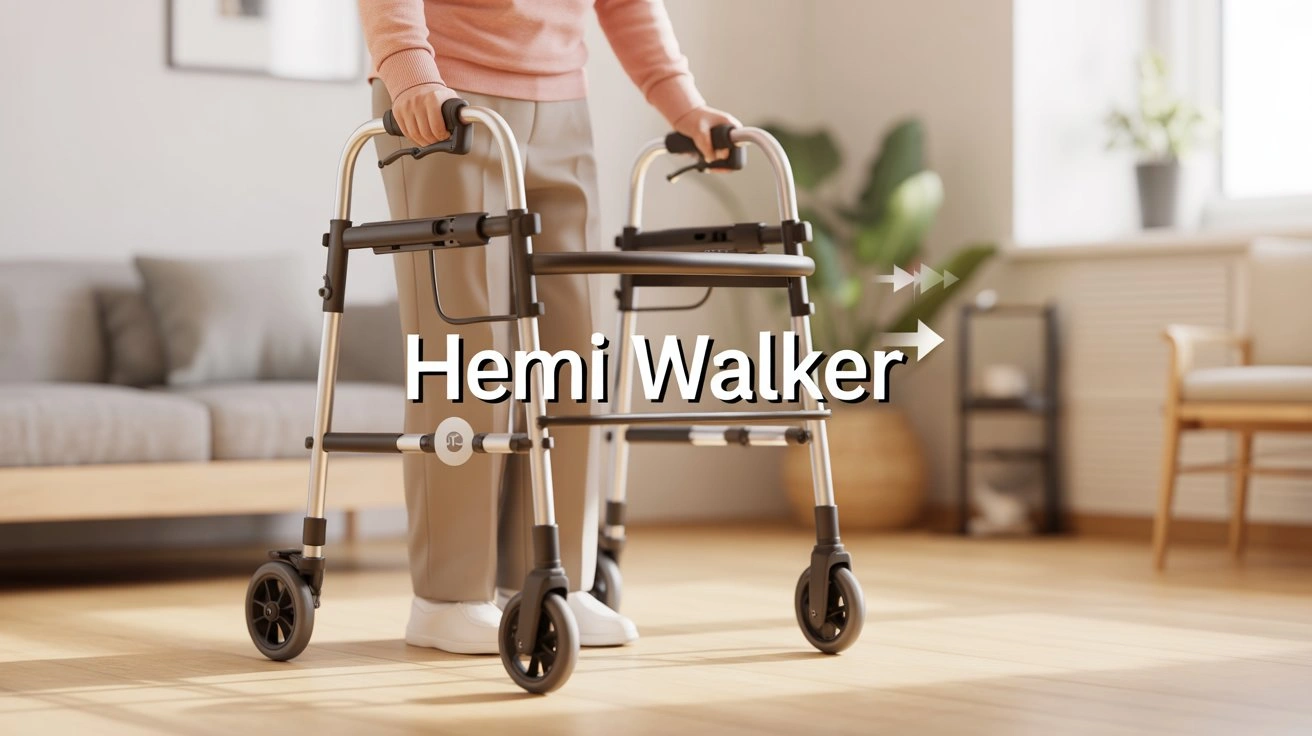
Hemi Walker: 7 Powerful Facts Every User Must Know
A hemi walker is a specialized walking aid designed for individuals who experience weakness or mobility limitations on one side of the body. This supportive device plays an essential role in rehabilitation, especially after a stroke, surgery, or injury affecting unilateral strength or stability. For many people, the hemi walker becomes a bridge toward safe and independent movement when a cane feels inadequate and a traditional walker requires more control than they can manage.
This updated guide provides clear insights into what a hemi walker is, why it matters, how to use it safely, and which real-world situations benefit most from it. Every section is crafted to maximize readability, follow modern SEO principles, and reflect hands-on knowledge from rehabilitation environments.
What is a Hemi Walker?
A hemi walker is a one-handed mobility device with a wide, stable frame that offers greater support than a cane while remaining lighter and more manageable than a full-size walker. Its four-point base enhances balance and allows users to maintain safer movement patterns.
Unlike a standard walker, which relies on both arms, this supportive walking device is intended for people needing unilateral assistance. It is widely used in rehabilitation centers and home care for those recovering from neurological, orthopedic, or age-related conditions.
This tool is most beneficial for:
- People with hemiplegia
- Stroke survivors
- Individuals unable to grip with both hands
- Those needing more stability than canes provide
Its thoughtful design makes it an ideal solution for individuals seeking a balance between support, mobility, and independence.
Why People Use a Hemi Walker — Core Benefits
The hemi walker provides several life-improving advantages that enhance safety, stability, and independence. These benefits include:
Improved Balance
Its broad base and sturdy frame help users shift weight safely, greatly reducing the risk of falls.
One-Hand Operation
For individuals recovering from stroke or injury, using a device that works entirely with one arm allows safer, more controlled walking.
Lightweight Design
The frame is typically made from light materials, making the device easier to maneuver indoors and in tight spaces.
Confidence Boost
Once users begin moving comfortably with this support tool, fear of falling decreases and confidence increases.
Customizable Fit
Most models allow users to adjust the handle height and grip style to maintain proper posture and reduce fatigue.
Who Typically Needs a Hemi Walker
A hemi walker is frequently recommended for individuals experiencing:
- One-sided weakness due to stroke or nerve damage
- Reduced arm strength after surgery or fractures
- Severe imbalance where a cane is insufficient
- Challenges in gripping traditional walkers with both hands
Therapists often introduce this device early in rehabilitation because it encourages symmetrical movement patterns while keeping users stable and safe.
Challenges and Limitations of Using This Device
Although the hemi walker offers significant support, it also presents some limitations:
Not Ideal for Rough Surfaces
It performs best on smooth, even floors. Slopes, wet surfaces, or gravel can compromise stability.
Requires Basic Balance
Users must be able to maintain posture and shift weight confidently.
Proper Fitting is Essential
If the height is incorrect, it may cause shoulder strain or poor body alignment.
Not Meant for Stairs
This type of mobility support tool should never be used on stairs due to safety risks.
Cognitive Awareness is Needed
Users must remember proper walking technique and avoid placing the frame too far ahead.
How to Use a Hemi Walker Safely: Step-by-Step Guide
Here is a simple and effective way to use the hemi walker safely:
1. Adjust Height Properly
The handle should be aligned with the wrist crease when standing naturally. Your elbows should bend slightly while gripping it.
2. Position It on the Stronger Side
Place the device on the stronger side of your body. This ensures that the weaker side receives adequate support during movement.
3. Step Forward Carefully
Move the frame a short distance ahead. Step with your weaker leg first and follow with the stronger one. Slow, controlled movement is key.
4. Keep Steps Small
Avoid overstretching your stride, which can lead to imbalance.
5. Choose Safe Walking Surfaces
Clear your walking area of obstacles, loose rugs, or clutter to prevent tripping.
6. Inspect Regularly
Check the rubber tips, grips, and frame parts regularly. Replace any worn components to maintain safety.
Real-World Use Cases and Observations
In therapy settings, the hemi walker is often introduced during early walking recovery. Many stroke patients use it to retrain balance and strengthen their weaker side. It promotes a more natural gait because it supports the body without overcompensating for one leg.
Older adults recovering from hip or arm surgery often rely on this side-support walker to regain freedom at home — whether navigating hallways, performing simple tasks, or moving between rooms.
Caregivers appreciate that this mobility device is lightweight, practical, and easy to move in compact living spaces.
Considerations When Choosing This Mobility Aid
When selecting the right device, consider:
- Adjustable height
- Handle comfort
- Weight capacity
- Folding or non-folding frame
- Overall weight
- Rubber tip quality
- Therapist recommendations
Choosing a model that matches your physical needs can greatly enhance comfort and safety.
When a Hemi Walker Might Not Be Enough
In some situations, a hemi walker may not provide adequate support. These include:
- Severe bilateral weakness
- Need to regularly climb stairs
- Outdoor use on uneven terrain
- Extremely limited grip strength
- Difficulty following safety instructions
In such cases, a standard walker, rollator, or wheelchair may be more suitable.
Safe Use Tips and Best Practices
For optimal safety:
- Use it on your stronger side
- Take slow, controlled steps
- Wear supportive shoes
- Clear walking paths
- Avoid wet or uneven surfaces
- Train with a therapist when possible
Practicing daily with good technique leads to safer, more confident mobility.
My Perspective: Why This Device Matters
After years of observing rehabilitation progress, I’ve seen firsthand how transformative this mobility support tool can be. It represents freedom for those who once felt trapped by their physical limitations. The moment a patient takes stable steps with a hemi walker, the spark of regained independence becomes visible.
While it is not a complete solution for every mobility issue, it often marks the beginning of meaningful progress toward walking with ease and confidence.
FAQs About This Walking Device
What makes this device different from a cane?
It offers more stability because it has a wider base and multiple ground contact points.
Can it help with stroke rehabilitation?
Yes, it is commonly recommended during early recovery to support the weaker side safely.
Is it hard to learn?
With proper instruction, most people adjust quickly.
Can it be used outdoors?
Yes, but only on smooth and even surfaces.
How do I know if I need one?
If you have one-sided weakness or cannot safely use a cane, this device may help.
Can it replace a standard walker?
Sometimes, depending on the user’s condition and mobility goals.
Conclusion
A hemi walker is an effective mobility solution for individuals dealing with one-sided weakness, limited balance, or reduced arm function. With proper use, it improves safety, confidence, and daily independence. Even though it has limitations, it remains one of the most valuable tools in rehabilitation and home mobility support.
If you or a loved one is progressing through recovery, this supportive device may be a crucial step toward regaining freedom of movement.